|
Título del proyecto |
Fortalecimiento de las capacidades de la Academia y del Sector privado de América Latina para la aplicación de los Principios para la Inversión Responsable en la Agricultura y los Sistemas Alimentarios |
| Entidades financiadoras: | FAO, Grupo Gesplan (UPM), Universidad Politecnica Salesiana (Ecuador) y UNM S Marcos |
| Entidades Participantes: | FAO, Universidad Politécnica de Madrid, Grupo Gesplan (UPM), Universidad Politécnica Salesiana (Ecuador) y Universidad Nacional Mayor San Marcos (Perú) |
| Duración: | 2016-2023 |
| Investigador responsable: | Adolfo Cazorla |
| Nº de Investigadores: | Ignacio de los Ríos (UPM), Ana Afonso (UPM), Xavier Negrillo (UPM), Ricardo Sttrata (UN de la Plata, Argentina), José Regalado (Colegio de Posgraduados) |
Principles for a Responsible Investment in Africulture and Voluntary Guidelines on the Responsible Governanece of Tenure of Land: Links with University
The Principles for Responsible Investment in Agriculture (RAI Principles), prepared by the Committee on World Food Security in October 2014, aim to contribute to food security, nutrition and the improvement of sustainable livelihoods for small-scale producers, taking a holistic, responsible, and respectful with the environment approach and supporting the right to an adequate nutrition in the context of national food security.
Voluntary Guidelines on the Responsible Governance of Tenure in the context of Food Security (VGGT) adopted in 2012, and their objective of being a reference and provide guidelines to improve governance of tenure of Land, Fisheries and Forests in the Context of National Food Security, and supporting the the progressive realization of the right to adequate food in the context of national food security.
VOLUNTARY GUIDELINES ON THE RESPONSIBLE GOVERNANCE OF TENURE OF LAND, FISHERIES AND FOREST
- Human Dignity
- Non-discrimination
- Equity and justice
- Gender equality
- Holistic and sustainable approach
- Consultation and participation
- Rule of law
- Transparency
- Accountability
- Continuous improvement
With the objective of disseminating the RAI Principles, FAO entrusts the Research Group of UPM GESPLAN a first work to carry out Workshops with different approaches: Territorial Research Workshops in two selected disadvantaged communities in Latin America, and Encounters for dialogue, reflection and debate with entrepreneurs, academics and civil society actors linked to agrifood systems in Spain.
RAI PRINCIPLES RESPONSIBLE INVESTMENT IN AGRICULTURE AND FOOD SYSTEMS
- P. 1: Contribute to food security and nutrition
- P. 2: Contribute to sustainable and inclusive economic development and the eradication of poverty
- P. 3: Foster gender equality and women’s empowerment
- P. 4: Engage and empower youth
- P. 5: Respect tenure of land, fisheries and forests, and access to water
- P. 6: Conserve and sustainably manage natural resources, increase resilience and reduce disaster risks
- P. 7: Respect cultural heritage and traditional knowledge, and support diversity and innovation
- P. 8: Promote safe and healthy agriculture and food systems
- P. 9: Incorporate inclusive and transparent governance structures, processes, and grievance mechanisms
- P. 10: Assess and address impacts and promote accountability
Workshops held in Azuay (Ecuador), May 2016, were organized by the GESPLAN-UPM Group and Universidad Politécnica Salesiana (UPS). Experiences were shared between producers of the Prograserviv Cooperative and the Camposeven Cooperative of the Region of Murcia (Spain).
The possible connections between organic biodynamic production and the Andean culture were explored, as well as the growing demand for these products and their possibilities for a better commercialization considering the frame of RAI Principles, particularly 8 of them.
Two workshops were held in Puno (Peru) in Juli and Huancane municipalities and were attended by a total of 58 women from the Aymara Community. The workshops were driven by two nutritionists and a chef, professors of the Universidad Católica Sedes Sapientiae (UCSS), with the support of researchers from the GESPLAN-UPM Group that are linked to the Coordinator of Aymara Women (CMA) project. The contents of the workshop sought to transmit, through dynamic and demonstrative techniques, three main ideas that were related to 3 RAI Principles (1, 3 and 8).: the prevention of anemia, the importance of a balanced diet and the promotion of native and traditional foods with high nutritional value).
Companies, Associations and Universities (2017)
Taking advantage of the GESPLAN Group experience derived from the Network with Universities in Latin America and in order to give continuity to other rural development activities hat have already been developed for years, three workshops were held in Lima (Peru); Cuenca (Ecuador) and Bogota (Colombia).
A total of 195 people participated on the three workshops: 37 from Public Administrations, 57 Directives and representatives of associations and professional organizations, 21 anagers of private companies, and 79 academic leaders (teachers and researchers) of public and private universities. A total of 158 people (81%) were non-state actors. The organization of all these days involved an intense work of preparation and mutual learning that was ultimately the key to success.
Incorporation of RAI priciples and VGGT at Universities (2018)
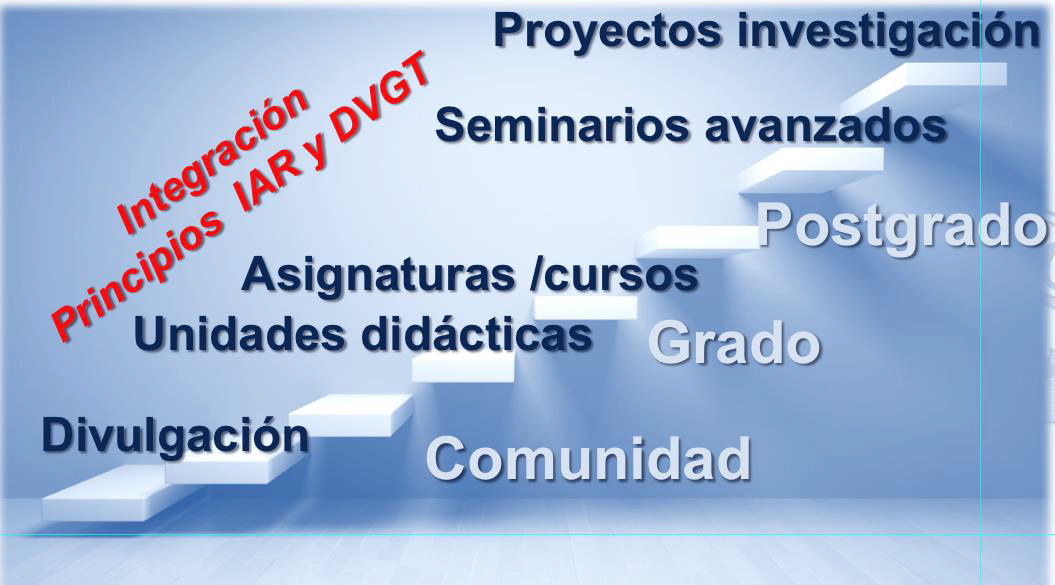
To achieve the objective indicated in the title, two Encounters were held in 2018 in Lima (April) and Bogota (June), with the aim of sharing experiences and learnings among the universities mobilized in previous years. As a result of these encounters, it was proved that the regulations of the different universities in the aforementioned countries allowed very diverse curricular developments in undergraduate, graduate, seminars or research lines.
Five research cases developed respectively by Colegio de Posgraduados COLPOS Mexico, Universidad de Piura, PAD-Perú and Universidad Politécnica de Madrid (two cases in Colombia and Chile) were delivered to FAO and enabled to acknowledge the great potential of RAI principles and VGGT for the near future:
Applied Research Cases in relation to RAI Principles
- Family farm in Puebla (Mexico): Linkage, transfer and dissemination of innovation by COLPOS
- Project of Food Security at local level in Latin-American context byUPM
- Poultry peruvian Association (APA): a business cooperation experience by PAD
Applied Research Cases in relation to VGGT
Developed by UPM:
- lternative Development and Illicit crops in La Macarena (Colombia)
- Land Governance and the Mapuche conflict (Chile)
“Curricula, case studies and seminars to increase knowledge and ability of the universities on the Principles for responsible investment in agriculture (RAI Principles) and the Voluntary Guidelines on Governance Responsible for Land Tenure (VGGT)”
15 Universities signatories of individual commitment:
- Universidad Nacional Mayor de San Marcos (Perú)
- Universidad Nacional de la Plata (Argentina)
- Universidad Nacional de Colombia
- Universidad Politécnica de Madrid (España)
- Universidad Nacional de San Agustín (Perú)
- Universidad Politécnica Salesiana (Ecuador)
- Universidad Católica Sedes Sapientiae (Perú)
- Colegio de Posgraduados (México)
- Universidad Católica de Santa María (Perú)
- Universidad de Piura, PAD (Perú)
- Universidad Autónoma de Nariño (Colombia)
- Pontificia Universidad Católica Madre y Maestra (República Dominicana)
- Universidad Uniagraria de Colombia
- Universidad del Tolima (Colombia)
- Universidad Pedagógica y Tecnológica de Colombia
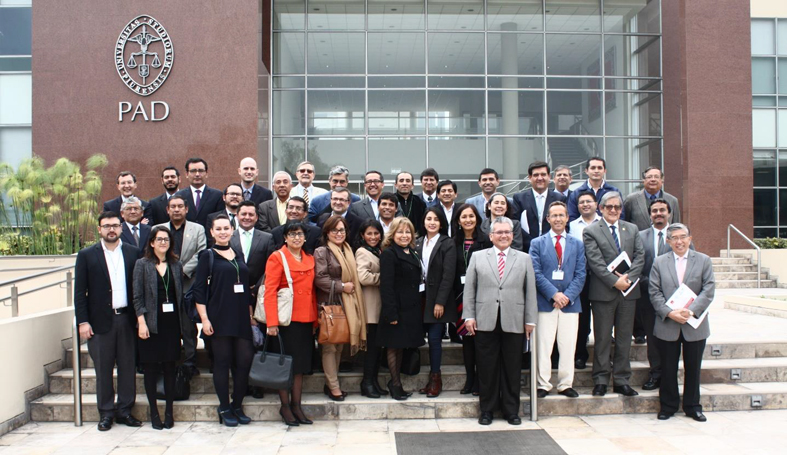
Signing of the joint commitment agreement
A raising awareness work has been developed througout the years 2016 and 2017 with non-state actors such as companies, bussiness associations, non gubernamental organizations and, particulary, universities. The work with universities, that aimed to insert RAI Principles and VGGT Guidelines in university curricula in both, teaching (graduate and post-graduate) and research, enabled a dinamization that reached 27 universities from 7 countries (Peru, Argentina, Ecuador, Mexico, Colombia, Dominican Republic and Spain).
To consolidate this process an intensive work was planned ending in December 2018 and resulting in the commitment of 15 universities from Latinamerica and Spain, as well as a joint agreement to act in coordination and continue the work reflected in the individual commitments and aligned to new futre actions.
Jornadas de diálogo para la inclusión de los Principios IAR y las DVGT en el ecosistema universitario de Latinoamérica (Marzo, 2018). CONCLUSIONES
Las jornadas supusieron un proceso de sensibilización a agentes clave muy importante, con 23 Universidades de 6 países (Ecuador, Colombia, Perú, México, Argentina y España) con 78 autoridades y responsables académicos. Por consiguiente, se tiene la base para una Red de Universidades en América Latina para dar continuidad, fortalecer e implantar nuevas actividades de desarrollo rural insertando la temática de los Principios IAR y las DVGT.
El modelo se ha aplicado en una primera fase en 12 Programas, en los niveles educativos de grado y postgrado, de 9 Universidades de 5 países, consiguiendo el objetivo de iniciar a medio plazo, cambios metodológicos para insertar la temática de los Principios IAR y las DVGT en sus diferentes formas en los currículos de carreras de grado y postgrados, así como en actividades de investigación.
Se creó un grupo interdisciplinar e internacional de más de 70 profesores de 6 países y diferentes niveles –grado y postgrado– que comparten conceptos metodológicos y un lenguaje común, lo que facilita una colaboración estable a largo plazo, abriendo nuevas posibilidades de innovación y cooperación educativa, haciendo posible el compartir metodologías y recursos.
Desde la Red de Universidades participantes, existe interés en una segunda fase, para buscar la cooperación y la vinculación, entre empresas y entidades públicas (universidades, Organizaciones no gubernamentales) para trabajos conjuntos, especialmente en México, Argentina, Perú, El Ecuador y Colombia, y poder llevar a territorios específicos este enfoque de la integración de los Principios IAR y las DVGT con el fin de generar riqueza en el medio rural y contribuir a la seguridad alimentaria.
Inclusión de los principios IAR y las DVGT en el ámbito académico: compromisos de docencia e investigación en 15 universidades latinoamericanas y españolas (Enero, 2019)
Se resumen a continuación las principales conclusiones para la inclusión de los Principios IAR y DVGT en los currículos académicos a la vista de los compromisos adquiridos desde las Universidades latinoamericanas y españolas.
- Se ha consolidado en el marco de las Jornadas y Talleres el compromiso en relación con los Principios IAR y las DVGT, que incluya a 15 Universidades de 7 países (Ecuador, Colombia, Perú, México, Argentina, República Dominicana y España) que ya han iniciado cambios metodológicos para insertar la temática de los Principios IAR y las DVGT en sus diferentes formas en los currículos de carreras de grado y posgrados, así como en actividades de investigación. Distintas experiencias se han aplicado ya en más de 15 Programas curriculares, en los niveles educativos de grado y posgrado.
- Se ha creado un grupo interdisciplinar e internacional de más de 80 profesores de 6 países en diferentes niveles –grado y posgrado– que comparten conceptos metodológicos y un lenguaje común en relación con los Principios IAR y las DVGT, lo que facilita una colaboración estable a largo plazo, abriendo nuevas posibilidades de innovación y cooperación educativa, y haciendo posible el compartir metodologías y recursos. En estas Universidades se han creado equipos docentes en relación con la temática.
- La Red de Universidades coordinada desde el Grupo de Investigación en Planificación y Gestión Sostenible del desarrollo Rural-Local (GESPLAN) de la UPM, brinda una oportunidad inmejorable para avanzar en la dirección de los compromisos adquiridos, impulsando desde la Innovación Educativa la renovación docente de las enseñanzas universitarias en el ámbito de los Principios IAR y las DVGT, como una línea estratégica de actuación de todas las Universidades que se han comprometido.
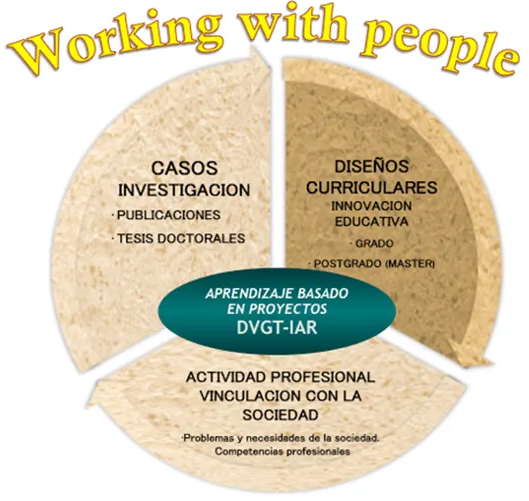
- El modelo WWP en el ámbito de la gestión de los proyectos de desarrollo rural, se ha contrastado especialmente adecuado para los casos de estudio de investigación y promover proyectos conjuntos que integren los Principios IAR y las DVGT, y solucionar conflictos sociales desde un aprendizaje social. Desde este marco conceptual y metodológico, ya se han acometido numerosas experiencias con empresarios y comunidades rurales, en laboratorios «vivos», en relación con la aplicación de los Principios IAR y las DVGT.
- Existen formas de vinculación de la docencia con las necesidades reales, facilitando la preparación de profesionales sensibles y comprometidos con los Principios IAR.
- En la Red de Universidades participantes existe interés en una nueva fase de este proyecto, para buscar la cooperación y la vinculación, entre empresas y entidades públicas (universidades, Organizaciones no gubernamentales, empresas) para poder formar a profesionales y desarrollar investigaciones en los territorios específicos, desde este enfoque de la integración de los Principios IAR y las DVGT, con el fin de generar riqueza en el medio rural y contribuir a la seguridad alimentaria.
- Se considera necesario continuar con las estrategias de implementación y seguimiento de las metodológicas para la inclusión de los Principios IAR y DVGT en la curricula académica de las carreras de grado y posgrado de las universidades participantes. Igualmente hay muchos aspectos en los que avanzar en los productos ya diseñados y en las futuras estrategias docentes del grado y posgrado. Las autoridades de las Universidades participantes han mostrado su compromiso y han argumentado la necesidad de continuar trabajando de forma conjunta en el futuro.